 Fraunhofer-Institut für Techno- und Wirtschaftsmathematik ITWM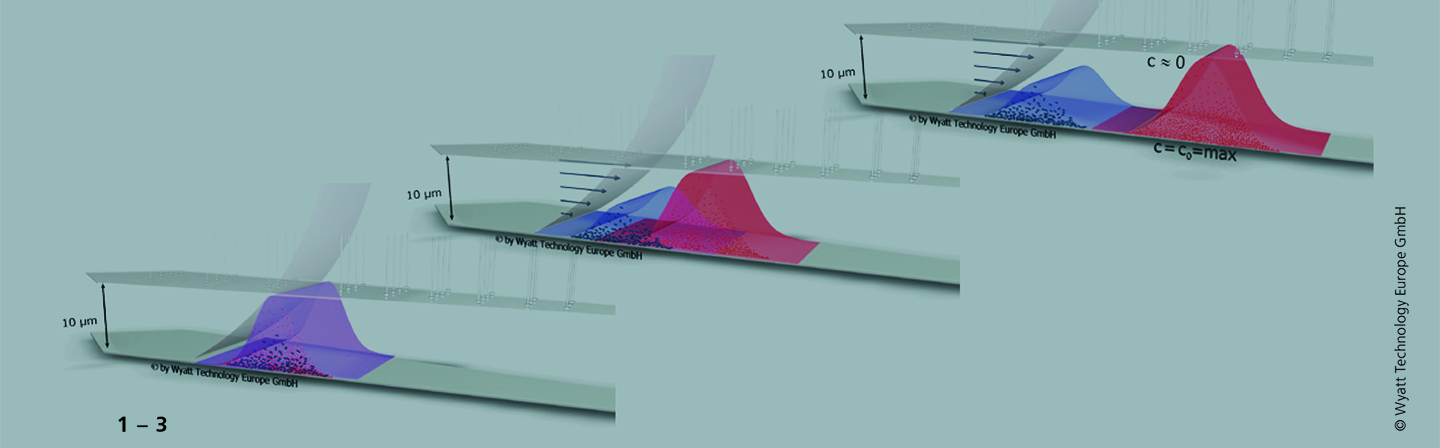
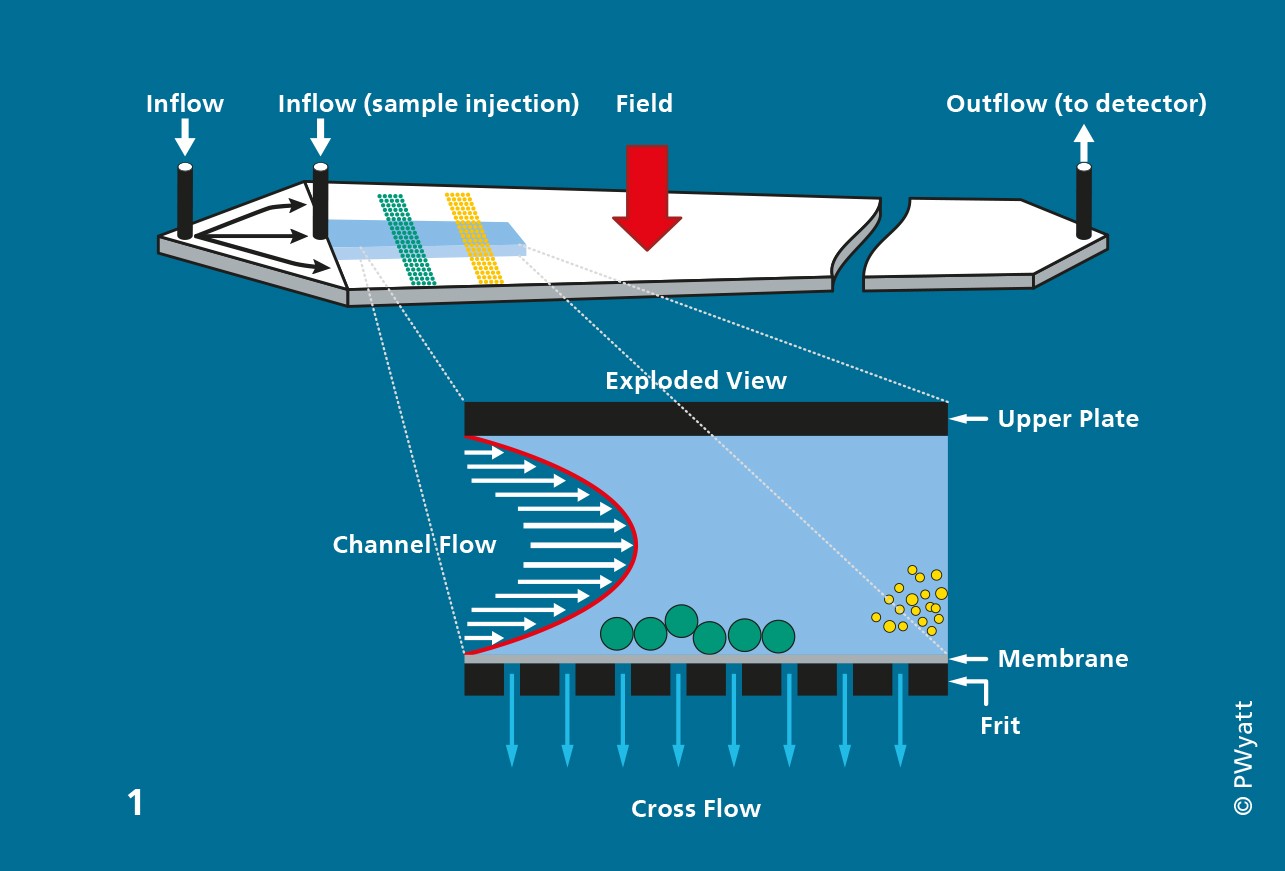
Die asymmetrische Fluss-Feldfluss-Fraktionierung (AFFFF) und die elektrische Feldfluss-Fraktionierung (EFFF) sind einfache und robuste Methoden zur Separierung von Nano- und Mikropartikeln in Lösungen und Dispersionen. AFFFF ist eine ausgereifte und häufig von der pharmazeutischen Industrie und an Hochschulen eingesetzte Technologie. Sie macht sich die Interaktion von Diffusion und Strömungsfeld auf Partikeln mit unterschiedlichen Radien zunutze.
Schematische Darstellung der AFFFF
In der oberen Abbildung ist eine schematische Darstellung der AFFFF zu sehen: Die Partikel werden separiert wegen der Interaktion von parabolischer Strömung nach rechts und vertikaler Querströmung mit unterschiedlicher Diffusion.
- Anfangstadium: Die Partikel sind gemischt (Verteilungsfunktionen liegen aufeinander).
- Mit der Zeit verschieben sich die Verteilungsfunktionen, da die kleineren Partikel (höhere Diffusion) schneller nach rechts transportiert werden.
- Das Ziel ist erreicht, wenn beide Typen von Partikeln getrennt sind.
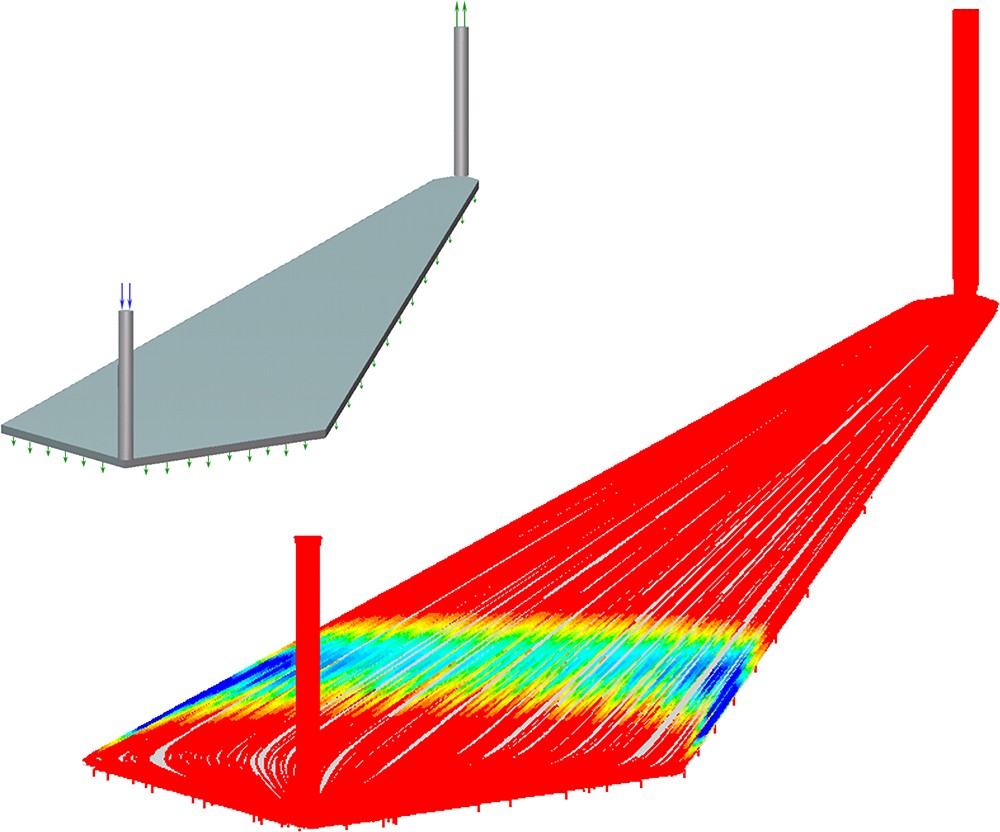
Die Konzeption des Trennsystems beruht auf einer sorgfältigen analytischen Studie der Strömungsverhältnisse und der Trennung in einem Mikrokanal. Eine weitere Verbesserung der Leistung dieser Geräte ist mithilfe mathematischer Modelle und Computersimulationen möglich.