NASE – Neural Architecture Search Engine

AI Agent for Multi-Criteria Hardware Optimization of AI Models

Cloud-edge and embedded solutions increasingly adopt AI as a core component to make services more reliable and improve the user experience. But bringing AI towards the edge is difficult, as the AI models need optimization for the executing hardware platform. Common design processes do not scale, as adjusting models manually results in long development times.

Recently, agentic systems have demonstrated for many programming and development tasks that development time can be reduced significantly by the automation of design and testing cycles. Agentic AI systems can solve complex tasks reliably by interacting with external tools and testing systems. At the same time, AI agents interact with the user in natural language and explain the results in an easy to understand way. Even non-experts can utilize such systems to solve their problems, making complex technologies more accessible to everyone.

NASE is an agentic AI system that optimizes the execution of AI models for various edge and embedded platforms by using hardware awareness. It helps the user to specify optimization criteria and to identify the best models for the application and platform. NASE can directly design, deploy and test models on the target hardware, which allows it to verify model execution performance with real measurements. Development times can go down from month to weeks and the quality of the resulting models beats manual design.

NASE Is More than Just a Chatbot

As a mathematical institute, we understand the strengths and weaknesses of different Machine Learning approaches in depth. Language models are just a component in the mix of sophisticated AI methods that constitute NASE. We treat hardware optimization as a Bayesian black-box optimization problem. The user can provide custom optimization criteria, such as model accuracy, execution speed and energy consumption to identify the perfect model for the application. Genetic evolutionary algorithms are then employing multi-fidelity evaluation strategies to quickly identify the best solutions and train models, that are ready to be deployed on the target platform, without the need for porting. Dynamically trained surrogate models boost the speed of the search and make sure that the hardware verification is kept to the necessary minimum, thus saving on hardware evaluation cycles.

How to Get Started

Fraunhofer ITWM supports you in your journey towards efficient edge AI development. In a first, noncommittal meeting we figure out where you stand and what you need to advance with AI more effectively.

If you are at a stage where you struggle with the implementation of edge AI, we support you in identifying the best models for your system.
For a good starting point, we need:

  • Target hardware platform
  • Labeled data
  • A baseline model to compare against
  • Target requirements (e.g. accuracy, execution speed, energy consumption)
AI Agents for a new era in Edge AI development
© Fraunhofer ITWM
AI Agents for a new era in Edge AI development

In the end you will receive

  • A selection of optimized models with different performance trade-offs
  • Pruned and quantized model weights, trained on your problem
  • Training and evaluation setup to reproduce the results
  • Verified hardware performance
  • Individual consulting and integration support

NASE is also available as a software license, executable on premises or in the cloud. We offer a trial version for a hands-on experience with NASE, if you want to interact with an agentic system on your own to solve your problems. Feel free to contact us!

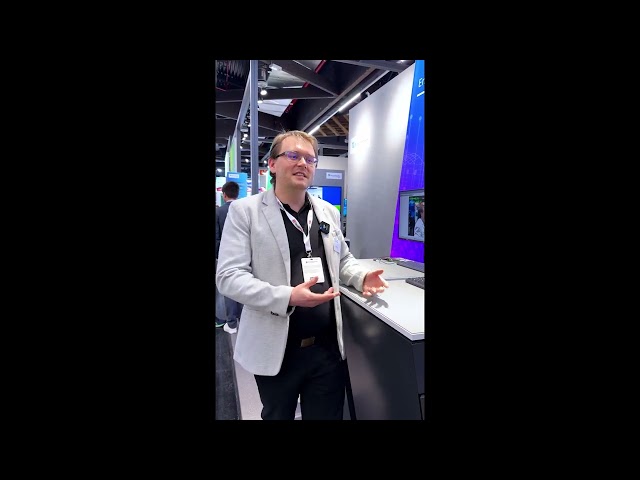
Statement Dominik Loroch about NASE

Video made at the trade fair Embedded World

Privacy warning

With the click on the play button an external video from www.youtube.com is loaded and started. Your data is possible transferred and stored to third party. Do not start the video if you disagree. Find more about the youtube privacy statement under the following link: https://policies.google.com/privacy

At the »Embedded World« trade fair in Nuremberg, Dominik Loroch from Fraunhofer ITWM presents our work at the joint Fraunhofer booth.